
Posts in Business Fix Pros Blog

MILLENNIALS, AND BEYOND

March 5th, 2018 Posted by Business Fix Pros Blog 0 thoughts on “MILLENNIALS, AND BEYOND”

The generation known as “Millennials” is called “Generation Y” in most studies, and is now between 21 and 36 years old.  Though there are discrepant dates used for Generation Y, Pew Research uses birth dates between 1981 and 1996, and this range seems to be the most widely used.

Much is made about the difficulties in managing this group of people; rarely a day goes by without some insulting comment being made about them both on social and traditional media.  The largest demographic in the workforce now, millennials have overtaken Gen X and comprise 30% of management positions.  Is this really a group we in upper management should be making fun of?

This is the most connected workforce in history, and their command of social media, information, and technology in general far surpasses those of us from the previous generation.  They see your “snowflake” comments on your personal social media, either first hand through research or forwarded from others.  I remember a college professor lumping me in with the “me generation” as he called it; it was the last time I listened with interest to anything he said.

Some facts worth noting – millennials are more charitable, yet carry double the debt and earn 20% less than their parents did at the same age.  Are some of them carrying a chip on their shoulder, or feeling entitled?  Certainly.  Is that the benchmark for the entire generation?  We think not.  There is a generalization for every generation, but we are hiring individuals.  When we complain about a spoiled, entitled young employee, we might ask ourselves who hired them, and why?

There are specific things millennials are prone to look for in their employment; learning these desires and providing a challenging and inclusive workplace is the key to employing a group of people that, in our estimation, take a lot more flak than credit when it comes to the perception of their skills and value to their employers.

If you would like to know more about hiring, training, and working with this vast, diverse group of people, please contact us for a free consultation.  Ignoring them as a force will not help – they are staying, and it is we who are leaving…….

 

3 REASONS YOUR STAFF IS NOT PERFORMING

February 22nd, 2018 Posted by Business Fix Pros Blog 0 thoughts on “3 REASONS YOUR STAFF IS NOT PERFORMING”

Volumes have been written regarding employee performance and the lack thereof, with very complicated explanations that border on psychoanalysis.  For us, it’s really quite simple – there are only 3 reasons why our employees are not performing the way we expect them to.  Now for the uncomfortable part – at least two of these reasons are our fault.

They don’t know what you expect

If the expectations for a particular task or procedure were not explained clearly, you cannot fault them for underperforming.  Explaining something once, in a manner that made sense to you, is not a way to convey expectations to an employee.  The standard must be clear, along with the goal we are trying to achieve.

They can’t do what you expect

This is where training comes into place, both at the outset of their career and beyond.  Simply telling someone to perform at a certain level and providing no training is like asking them to watch a movie with no sound and report on it later; everyone will have their own interpretations and come up with their own conclusions.  In business, this results in staff members doing the same task many different ways.  Companies that forego continuing education and training for their staff risk delivering inconsistent results to their customers and partners.

They won’t do what you expect

Once everyone is clear on the expectations, and has proved to be capable of performing the task or procedure through training and testing, there is only one reason for non-compliance or poor performance, and that is a “won’t do” situation.  The solution is simple; you must remove them from your team or company.  You are under no requirement to coddle employees who chose not to perform; indeed, you are doing a disservice to the producers by letting them stay.

Applied evenly, this simple approach to managing performance will keep you in good graces with HR, as well as demonstrate a fair and understandable management style to your employees.  As with all strategies, this seems easier in print than it is in practice.  Give us a call or set up a free one-hour consultation to learn more about this and other techniques for making your business less stressful to manage.

WHAT IF YOU JUST GAVE UP?

February 19th, 2018 Posted by Business Fix Pros Blog 0 thoughts on “WHAT IF YOU JUST GAVE UP?”

I’m certain everyone reading this has learned something through repetition. Maybe it was a musical instrument, or a particular skill. Perhaps it was a sport you were interested in, and had to go to practice until you became a valued member of the team. Children are taught new things all the time, and are told they must evaluate what they learn through homework, testing, etc.

Imagine what would have happened if you had given up immediately on learning to read, or riding a bike – where would you be? Repetitive behaviors encourage proficiency and hone skills; however, we see the reverse of this in the business world all the time.

New practices and techniques are discarded almost immediately when immediate success is not achieved. “That won’t work in this market”, or “I tried it but it wasn’t effective” is proclaimed after a few casual attempts. Where did that kid who practiced his/her soccer skills for hours in the park go?

Overnight success usually takes about 10 years – rarely does anything of value come immediately. If it did, everyone else could also do it and your skills would be worthless. You are not going to go to a convention or seminar and immediately be adept at the things you learned there. Practice, repetition, and supervision combined with critical thinking is vital for success. You are responsible for the success of a team or a business, and it is incumbent upon you to be the coach – do not let them give up simply because they are not succeeding right away.

Doggedly pursuing an activity or procedure that has proven ineffective isn’t smart either, but how will you know if your staff has taken a few cursory stabs at it and reported that it doesn’t work? We have gone into many businesses and seen exactly this scenario – a staff that is threatened by change and therefore torpedoes any new initiative that might result in more work. As a leader, you must drive change through effort. Training, practice, and honest evaluation of results – none of this happens overnight.


For information on staff training, new techniques, and what to measure for success, please contact us for a free one-hour business consultation.

management leadership decision making

LONELY AT THE TOP – OWNING UNPOPULAR DECISIONS

February 12th, 2018 Posted by Business Fix Pros Blog 0 thoughts on “LONELY AT THE TOP – OWNING UNPOPULAR DECISIONS”

It may be “lonely” at the top, but this is what we get paid for……….. 

Most mid-level managers have had the experience of communicating an unpopular decision or implementing a program that will be disliked by the rank and file.  These decisions or programs were made by upper management, and it is now your job to make them work.  Leadership skills in these situations are essential to both the achievements of your staff and your success as their manager.  How you handle this is important, because everyone is watching.

Many young managers attempt to gain acceptance from their staff by aligning themselves with the employees rather than the company.  This is the worst thing you could do, as you will be perceived as weak by the very people you were trying to impress.  “I wouldn’t do it this way but the company insists”, or some similar statement, puts you on the side of the complainers rather than the achievers.  There is nothing wrong with hearing them out, and being open to discussion, but you must own this and treat the implementation as if it were your idea from the start.  You are being paid and trusted to advance the company objectives, and you will fail both your employer and your employees if you side with the dissenters.

It is easier to see the issue if you take it from the company’s position.  Suppose you ask your subordinate to implement something that he or she disagrees with; something that you hashed over previously and have decided to move forward with, despite some reluctance on the part of this manager.  Are you better served by this manager commiserating with the staff, or by a commitment to the change and their support of the company?

More simply put – good leaders complain “up the chain of command”, not down the line to their subordinates.  Your chance to change the policy came during its formation – that chance is over now, and your charge is to make even an unpopular decision successful.  You owe it to your staff as well as to your company.

Management decisions are often complicated situations; contact us here to learn about our Business Coaching Program

WOULD YOU FIRE YOUR BOSS?

February 5th, 2018 Posted by Business Fix Pros Blog, Uncategorized 3 thoughts on “WOULD YOU FIRE YOUR BOSS?”

If the balance of power was completely upended, and bosses could be fired by their employees – how many would have their jobs tomorrow?

Not many, in our estimation.

Leadership figures that bring value to their employees would be the only ones that survive. A philosophical exercise, to be sure, but one we think deserves some analysis when you endeavor to create a company culture and recruit talented, driven individuals. Task driven, top-down management styles may be great for running an assembly line, but fail miserably when applied to multiple site location management where trust is required; you simply cannot be in two places at once.

Position Power is easy to understand. Employees view the term with reference to a controlling manager; hence the negative connotation that comes from experiencing managers using it. When your staff does things because of what you will inflict upon them for non-compliance, you poison the work environment and must constantly supervise them. This makes it impossible to manage multiple locations; they simply do not care about your goals and have no trust in your leadership.

Personal Power takes much longer to develop, which is why only managers with the proper level of personal and social skills can employ it effectively. Employees will quickly see your actions, determine your intentions, and judge your integrity. You must bring value to their employment in excess of a paycheck. Continuing education, training, and rolling up your sleeves and helping them succeed are great ways to earn the trust necessary to groom and retain the personnel necessary to grow your business. All of this takes time and effort; you cannot fake your way through this, but the results are well worth the investment.

We suggest taking a look at the current level of education, training, and interest you are providing directly from your office, not just the HR department. If you would like to discuss how best to implement this, please contact us for a free consultation. Your employees may not have the power to fire you, but they are certainly in charge of your success.

Success Goals Analysis Corporate Business Concept

WHO NEEDS A COACH?

January 5th, 2018 Posted by Business Fix Pros Blog 1 thought on “WHO NEEDS A COACH?”


Nearly every parent with a child involved in sports has noticed this phenomenon – no matter how many times you have shown them something, they don’t really buy into it until the coach tells them to do it.  It has nothing to do with the value of the information; sometimes it’s just a different voice, or approach.  Continuing education for employees has much the same effect, especially if there is follow up in the form of business coaching.

An especially valuable asset to an employee is having a coach they can come to with issues they would be hesitant to bring up to the management of their company.  It could be something as small as needing help in a particular skill or wanting oversight on their weekly routine.  This is common with production or sales staff – they don’t want to ask for help from their manager, for fear of being perceived as weak in that area.  A confidential relationship with a business coach can provide them with the insight and training to improve while maintaining their confidence, as well as the confidence of their employer or manager.

A coach can also provide reassurance for a business owner when they are doing things of value for their business.  Despite having the right objectives for their organization, management sometimes lacks the confidence to carry these through.  A coach can help an owner see what the opportunities are and provide a clear plan, allowing the owner to step back and see things with a more productive outlook. 

Identifying products, markets, and procedures are important aspects of growing a business; sometimes an outside, objective point of view is exactly what is needed.  Small and medium-sized business owners are often so caught up in working in their organization they have little time to work on the company as a whole.

Recognizing this need, and evaluating the costly programs for typical business coaching, BASE has established a system that can provide employee level coaching for as low as $195 per month.  Please see our site for details.  As always, we provide a one-hour complimentary business consultation – register for yours today.

ARE YOU STIFLING INNOVATION?

November 27th, 2017 Posted by Business Fix Pros Blog, Uncategorized 0 thoughts on “ARE YOU STIFLING INNOVATION?”

As we work with companies large and small, we see a management trait that is stultifying innovation, stifling new ideas, and thwarting open discussion.  Leaders who are too vested in their own opinions and view other opinions as an attack on their expertise are becoming more common.  I have personally seen ego-driven C level executives not only override other’s ideas without considering them, but then force everyone in the board room to parrot their particular point of view.  Whatever the cause, it is detrimental to your company’s growth and agility, and leaves you unable to adapt to new competition or market shifts.

Being too invested in your own ideas and failing to consider how you could be wrong makes it nearly impossible to be open to something new, especially if it contradicts your current assumptions.  This will result in your managers bringing you only those projects and ideas they feel will align with your current “world view” and forego other ideas as being too risky to bring up.  Your competitors are more likely to break ground with an exciting new innovation if this is your company culture.

The HIPPO effect is another way that small to medium sized companies compromise their innovation.  HIPPO stands for “highest paid person’s opinion”, and many meetings simply end up defaulting to what the boss thinks, rather than pursue ideas from the trenches.  Great ideas from people who actually sell your product or deal with your customers can be lost in an environment that values status over new input.

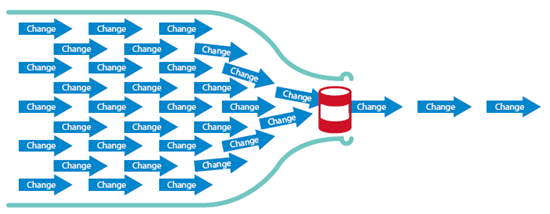
Finally, your organizational chart could be the problem with fostering innovation.  Chain of command works well with issuing orders and executing decisions, but it can bottleneck any new ideas or practices. Creative ideas that come from the middle or lower levels of a hierarchy have to work their way up through a series of managers, each with the power to veto but lacking the authority to implement the idea.  Changing a communications policy and allowing for ideas from the field to be vetted from the top, without having to hurdle mid-level managers, can do wonders for innovation and company morale.

For more on this and other topics, BASE offers a free one-hour consultation that you can register for here:


https://www.businessfixpros.com


ROTTEN TO THE CORE?

November 25th, 2017 Posted by Business Fix Pros Blog 1 thought on “ROTTEN TO THE CORE?”

Why does your Personal Trainer keep harping on core exercises? The answer is simple – all progress comes from a good foundation. It’s the same with an organization; if your core principles (or principals) are rotten, your company will exhibit the same characteristics.

Rotten to the core business fix pros

Think of it in terms of how it affects your employees. If they function in a culture where they are constantly looking over their shoulder for threats from within, they will never be prepared to do battle with external threats like competition, economic strife, etc.

I have seen this first hand in large companies. Politics, disingenuous leadership, poor communication and strife leaves middle management and the rank and file virtually paralyzed, waiting for the next bomb to drop. No new ideas are forthcoming, lest they be criticized or worse – the person proposing change can be labeled as a “poor team player”.

Witness how poorly prepared the large operations were for the onslaught of the disruptive discount model. This is what happens when you use people to make money, instead of using money to develop people.

Is your company spending a portion of its revenue on continuing education ? Do you have a budget set aside for this, complete with goals for employee turnover and development? If not, we suggest installing these immediately. Of course, we would be happy to assist you in this endeavor, but get help somewhere if this is not your forte.

Your employees will appreciate the new outlook and support. There is simply too much competition out there to be rotting from within.

Contact Us

You can reach out to us directly here for any questions. We will reply back as soon as we can and are looking forward to speaking with you!

Business Fix Pros Logo 348

Bootstrap Example
fb fb